Numina · Mesopotamian · I.2 Before the world
Chapter I.2
Before the world
Apsu wants silence. Tiamat raises an army. Marduk asks for a crown. How a war among the gods becomes the ground beneath our feet, and why Babylon stands at the centre of the story.
Apsu cannot sleep.
The younger gods are making too much noise. They move about, disturb the waters, and give their elders no peace. Apsu proposes a solution. He will destroy them. The world has not yet taken its familiar shape, but the wish to silence the next generation is already here.
Tiamat objects. These are their own children. Their behaviour may be hard to bear, but that is no reason to kill them.1
Remember her objection. By the middle of the poem, Tiamat will be the enemy whom Marduk must defeat. If we begin by calling her an evil dragon, we miss the mother who first tries to keep the family alive.
The poem is Enuma Elish, an Akkadian title taken from its opening words, usually rendered as “When on high”. It unfolds across seven tablets. This chapter retells its ancient story in modern prose, then asks what the story does with power, work, and the city of Babylon. It is a reading of one Babylonian poem, not a single account of what everyone in Mesopotamia believed.2
Two waters, before the shore
Go back a little, before the quarrel. The opening gives us a world without a named heaven or earth. There is no patch of marsh to stand in, no reedbed at the edge of a river. There are waters, mixed together.
They have names. Apsu is the fresh water, Tiamat the salt sea. They are also the beings from whom the gods descend. In this poem, water can be a parent. A sea can listen, become angry, and answer another voice.3
This is not creation out of nothing. Something already exists, and life begins within it. The poem does not explain who made the first waters. Its interest lies in what comes from them, and who will rule what follows.
Lahmu and Lahamu appear first. Anshar and Kishar follow. Then comes Anu, and after him Ea, the god whose skill will save the younger generation. These names slow the opening down. The gods arrive through generations, rather than stepping onto the page as an assembled court. Marduk is not there at the start.4
The title of our chapter needs that small correction. There is already a world of relationships before there is a world of settled places. Parents have children. Children grow stronger. Someone who once had no rival now has to share the waters.
The trouble starts there.
The first death
Apsu takes advice from Mummu, his counsellor. Tiamat urges restraint, but Mummu supports the plan to destroy the younger gods. Apsu welcomes it. Peace, as he imagines it, means an end to their lives.
The plan reaches its intended victims. They are frightened into silence. Ea understands the danger and acts before Apsu can carry out the threat. He casts a spell over the waters and puts Apsu into a deep sleep. Then he strips him of his power, binds him, and kills him. Mummu is captured.5
The first killing in the poem does not belong to Tiamat.
That does not make Ea’s act unprovoked. Apsu had planned to kill him and the others. It does mean that the later war grows out of something more troubling than a good god discovering an evil monster. This family has already chosen violence as a way to survive.
Ea establishes his dwelling upon the defeated Apsu. There he lives with his wife, Damkina. The name Apsu now serves as the name of a place as well as that of the slain father. Ea’s home is founded on his victory.
This movement from being to place will return on a much larger scale. For now, the waters that threatened the younger gods have become a home for one of them. The poem allows a death to be both an ending and a foundation. It will ask us to accept that twice.
A child who plays with storms
Marduk is born to Ea and Damkina in the Apsu. The poem makes him impossible to overlook. He has four eyes and four ears. Fire comes from his mouth. His grandfather Anu delights in him and gives him the four winds.
The gift is not harmless. Marduk’s winds stir the waters and trouble Tiamat. The gods who share her unrest complain. Once again, they cannot sleep.6
The noise that led Apsu towards murder has not stopped. Ea has gained a quiet dwelling, but his remarkable son brings a new disturbance to the household outside it. The poem is preparing its champion while also showing us why others might dread him.
It is easy to imagine Marduk as a young man with a weapon, simply larger than the gods around him. His birth scene is stranger. Extra eyes and ears give him more than ordinary sight and hearing. His body announces the claim that he will exceed the powers of his elders.
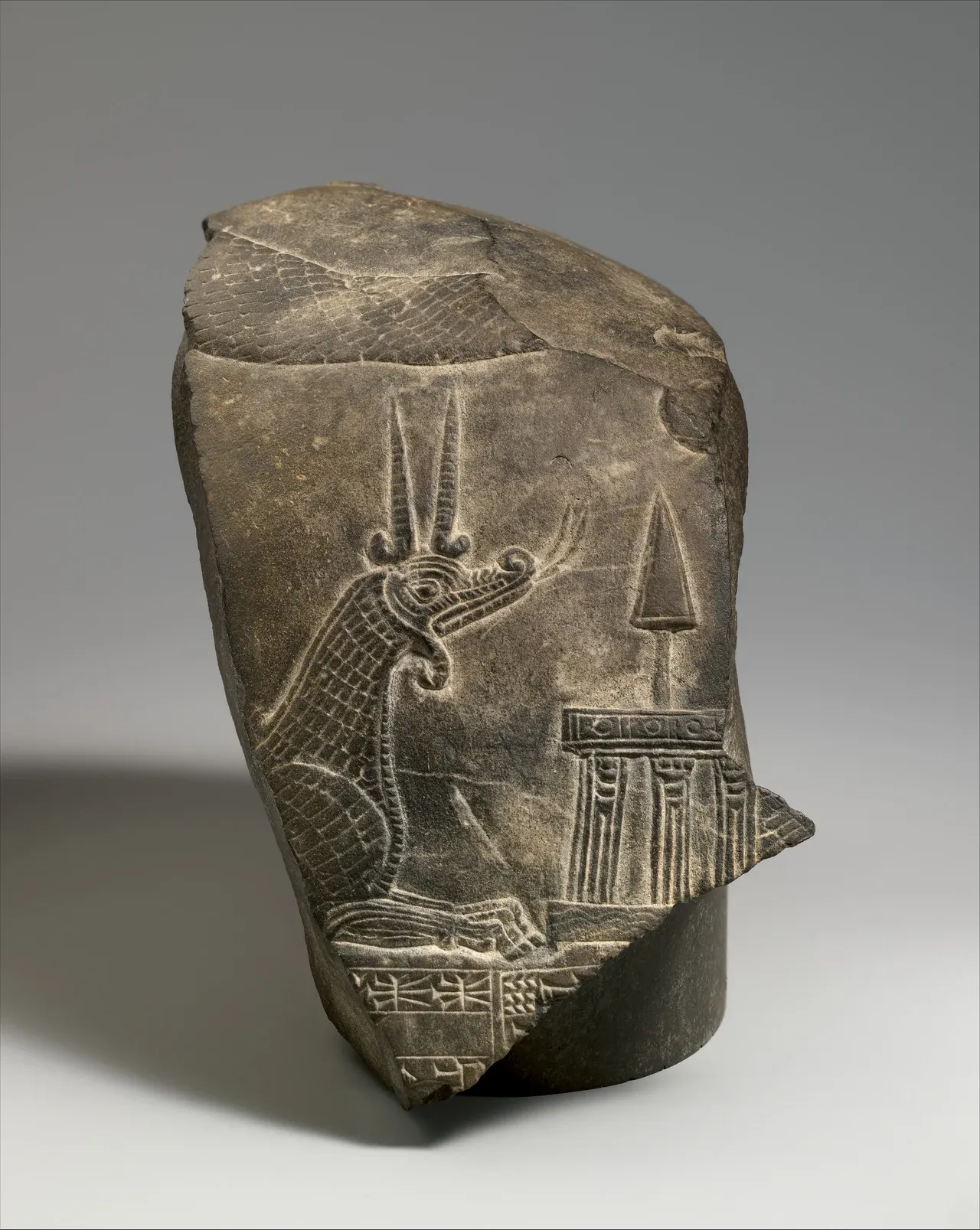
Plate I.2a. A mushhushshu dragon and divine symbols on a fragment of a Babylonian kudurru, about 1156 to 1025 BCE. The dragon and the spade emblem belong to Marduk’s imagery. This is not a portrait of Tiamat or an illustration of their battle. The Met, 1985.45. Rogers Fund, 1985. Image: The Metropolitan Museum of Art, public domain. Object record and full image.
The stone above offers a useful caution. A dragon in Babylonian art is not automatically Tiamat. This one belongs to the imagery of Marduk and his son Nabu. It stands among signs of divine authority on a monument of a kind used to record and protect grants of land.7
Tiamat herself resists a fixed picture. The poem gives her a body with human features, yet also speaks of a tail and treats her as water. Sophus Helle’s survey notes that no Mesopotamian image has been securely identified as Tiamat. Modern paintings can help us imagine the scene. They cannot settle what an ancient audience saw in its mind.8
Tiamat takes up arms
The complaining gods remind Tiamat of Apsu’s death. They ask why she did not act while he was being killed. Now, they say, the disturbance has become unbearable. They press her to fight.
She agrees. The mother who once resisted the destruction of her children now gathers a force against some of them. Other gods stand on her side. The battle will divide the family, not set all the gods against a thing that has no connection to them.
Tiamat makes terrifying creatures for her army. The poem names serpents, scorpion-men, and other beings whose bodies cross the boundaries between familiar animals. They bear weapons and inspire terror. Her power to bring forth life has become a way of making an army.9
She places Qingu, also written Kingu, at its head. He is her chosen consort and commander. She gives him the Tablet of Destinies and fixes it to his chest. This object carries authority over the divine order. Qingu is meant to command more than a group of soldiers.
That detail is easy to lose in a quick retelling. Tiamat’s side has a leader, an army, and a claim to rule. Calling it simply “chaos” hides the rival order it is trying to establish.
The poem wants us to support Marduk. We can recognise that intention without flattening everyone who opposes him. Tiamat has become dangerous, but she has a history. The story told us that history before it armed her.
A crown before the battle
Ea learns what is coming. He brings the news to Anshar. Attempts to face Tiamat fail; even the older gods cannot resolve the danger. Marduk offers to act, but he sets a condition. If he saves them, his command must stand above theirs. The assembly must grant him the authority to decide destinies.10
He is asking for a crown before he earns the victory.
The gods meet. They eat, drink beer, and agree to his demand. The pause for a feast can feel odd when an enemy army is waiting, but the gathering does something the fight alone cannot do. The gods make his rule binding among themselves. Strength needs their recognition.
They test his word. In the reading followed by W. G. Lambert, a constellation disappears at Marduk’s command and returns when he speaks again. Older translations describe a garment here. The difference is a reminder of the work discussed in The tablets: the English sentence depends on how the signs are read.11
Having proved that his speech can change what exists, Marduk prepares his weapons. He takes a bow and arrow, carries a mace, and makes a net. The winds surround him. His chariot is a storm.
At last he faces Tiamat. He accuses her of turning against her children and of raising Qingu to a rank that is not his to hold. The speech belongs to a claimant confronting another claimant. Each side has declared where authority should lie.
Tiamat answers in fury. Marduk casts his net. When she opens her mouth, he drives a wind into it, so that she cannot close her lips. The wind fills her body. He shoots an arrow through her and kills her.
Her allies lose their courage. Marduk captures them and takes the Tablet of Destinies from Qingu.12
He has won. The earth still has to be made.
The body of the world
After the battle, Marduk looks over Tiamat’s body and decides what to do with it. The poem compares his division of her to splitting a fish for drying. One half becomes the sky. He stretches it into place and sets a guard over the waters, with orders not to let them escape.13
The image is practical and terrible. Making a habitable world requires cutting, stretching, and holding things apart. The sea that gave birth to the gods has become the material their new king works upon.
In the next tablet, the work continues. Marduk assigns places to the stars and orders the year into months. The moon is given a course by which people can reckon days. Creation includes a calendar: the world must have a dependable pattern, not merely a shape.
Then Tiamat’s body becomes a landscape. The Tigris and Euphrates flow from her eyes. Mountains are heaped upon her breasts. Her waters, spittle, and bodily parts enter the account of clouds, mist, springs, and the earth itself. Some of these lines are damaged, and modern editions mark restored words. The main movement is clear even where the details are not.14
Marduk does not make Tiamat vanish. He makes the world from her.
That gives her defeat an unusual force. She can no longer act as an independent power, but the gods cannot build their home without her substance. The enemy remains everywhere as matter. The victory depends on what has been killed.
The poem also keeps boundaries under watch. Water belongs behind a barrier. Stars have assigned positions. The moon must follow its course. Seen this way, Marduk’s creation is a continuing rule over things that could otherwise get out of place. His title is not a reward separate from his work. Kingship is how the poem explains the world’s arrangement.
We should be careful about turning this into a claim about early human history. A male god’s killing of a female ancestor does not, by itself, prove that the poem records the overthrow of a real society once ruled by women. That would require other evidence. What the text does show is how its author makes conquest into the basis of a settled world.
People are made to work
Human beings arrive late. They do not witness the struggle or help to settle it. By the time they appear, the gods have already chosen a king.
Marduk proposes their creation so that they can carry the gods’ work. Ea advises that a god must be given up. The assembly is asked who caused the war. It names Qingu. He is bound and killed, and Ea creates humanity from his blood, carrying out the plan under Marduk’s authority.15
Two deaths now support the human world. Tiamat’s body gives it its material. Qingu’s blood makes its workers possible.
The account is not a celebration of human freedom. People receive a purpose chosen before they exist. Their work will allow the gods to rest. Yet the material from which they are made is divine. The same passage that assigns them a lower place also gives them a connection to the beings they must serve.
Qingu is blamed for the revolt, but the poem does not say that every human being therefore inherits his personal guilt. That is a further claim, not a line we should quietly add. Here his blood provides the means of creation, and the obligation placed upon people is service.
Look back at Apsu. He wanted rest and tried to gain it by destroying the younger gods. The settlement at the end gives the surviving gods rest by bringing another kind of being into existence to do their work. Read together, the two scenes make rest a question of who can require someone else to bear a burden.
The story has found a lasting answer to the gods’ problem. We are the ones who will live inside that answer.
A city at the centre
The freed gods offer to build Marduk a sanctuary. He directs them to build Babylon. They make bricks for a year. In the next year they raise Esagil, his great temple, and establish shrines. When the work is done, the gods gather for a feast.16
This is where the creation story has been heading. A reader who stops at Tiamat’s death has stopped before the poem reaches its chosen home.
Babylon is not introduced as one city among many. It becomes the place where the divine community can meet and rest. The ordering of the heavens leads towards the ordering of a city. Its temple is given a place within the structure of the cosmos.
The historical Babylon stood on the Euphrates, in what is now Iraq. It was not the first Mesopotamian city. Its actual beginnings and its later rise belong to human history. The poem gives it a different beginning, one in which its place is established by the gods.17
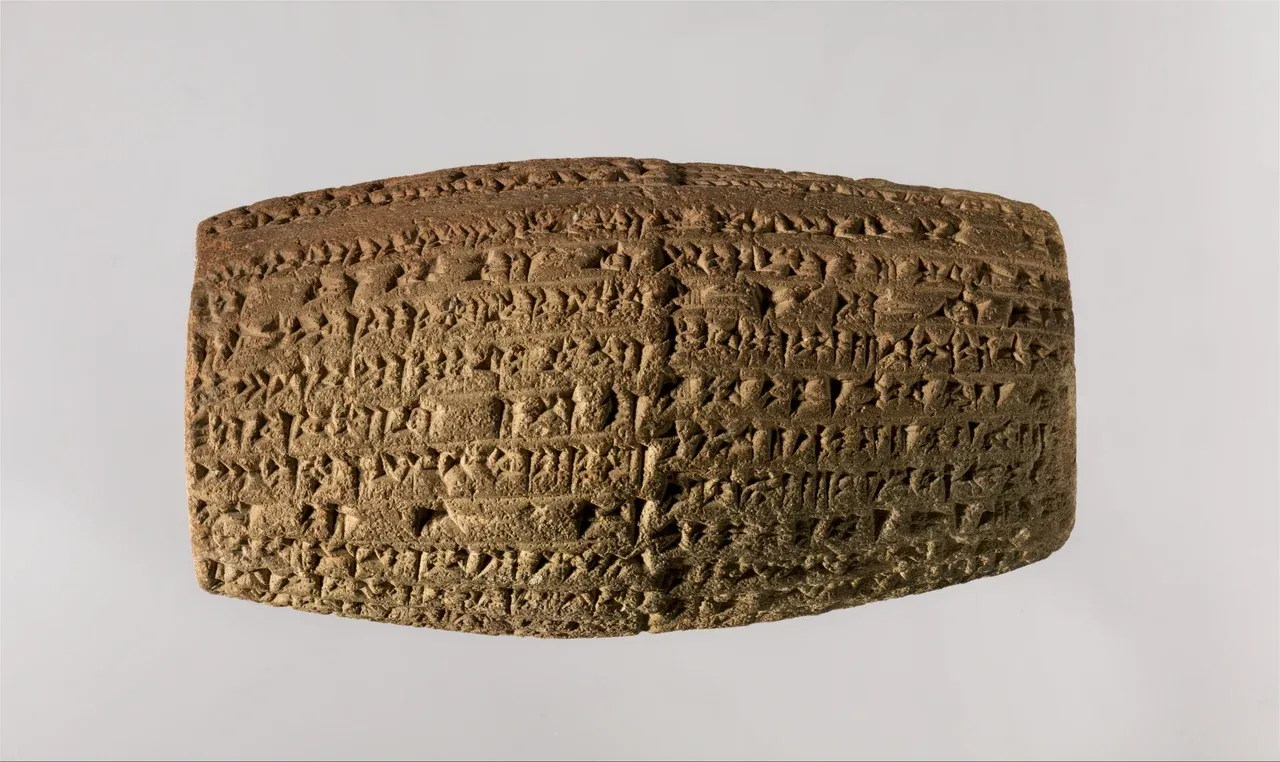
Plate I.2b. A building inscription of Nebuchadnezzar II, about 604 to 562 BCE, describing Babylon’s outer city wall. This is a royal account of construction, not a manuscript of Enuma Elish. The Met, 86.11.60. Purchase, 1886. Image: The Metropolitan Museum of Art, public domain. Object record and full image.
The cylinder above brings us back to the city built by people. Its inscription belongs to Nebuchadnezzar II and describes work on Babylon’s defences. The object is small enough to hold. The claims it records concern an enormous city.18
The poem’s date is less secure than the date of this royal inscription. A common scholarly proposal places its composition in the later second millennium BCE, around the time of Nebuchadnezzar I, or shortly after. That is a proposed historical setting, not a date supplied by a named author. Nebuchadnezzar I and Nebuchadnezzar II are different kings, separated by centuries.19
Calling the work political does not mean its religion was a disguise. Its claim about Babylon is a religious claim. The city’s god has saved the divine family and arranged the world. Worship at his temple belongs, within the poem’s own reasoning, to the order that keeps that world working. A city can be loved, governed, and understood through the same story.
Fifty names, and a voice in the temple
The closing movement gives Marduk fifty names. To a reader waiting for another fight, this can seem like a long ending after the action has finished. But naming is part of the action.
The names gather powers and tasks around him. They praise his care for fields and grain, his wisdom, and his ability to preserve divine life. Older gods recognise his authority. Ea even allows his own name and the work attached to it to belong to his son.20
The poem began before heaven and earth had names. It ends by asking its audience to remember the names of their ruler. Between those points, speech has granted kingship, commanded a test of creation, and assigned places in the world. The final list teaches people how to address the god who now holds those powers together.
The text calls for the names to be taught and passed on. Its intended life extends beyond a single performance. A father is to instruct his son; learned people are to discuss their meaning. Knowing the story is made part of serving its god.
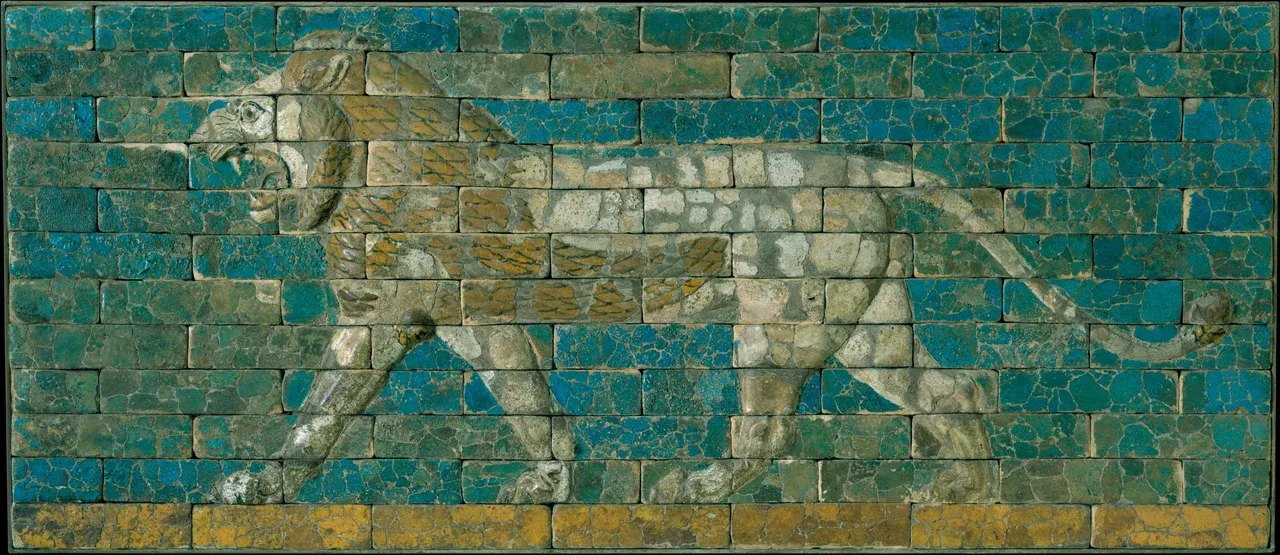
Plate I.2c. A glazed-brick lion from Babylon’s Processional Way, about 604 to 562 BCE. The lion is associated with Ishtar, not Tiamat. It belongs to the city’s ceremonial setting. The Met, 31.13.1. Fletcher Fund, 1931. Image: The Metropolitan Museum of Art, public domain. Object record and full image.
At Babylon, Enuma Elish was recited during the spring New Year festival, before Marduk’s statue in Esagil. The ceremonial city had its own routes and images. Glazed lions such as the one above lined the Processional Way. They belonged to Ishtar’s imagery and helped protect the route used for divine processions.21
We do not need to invent a listener’s feelings to see what that setting adds. A poem which gives Marduk kingship was spoken in his sanctuary. The city praised in the story was the city around the performance. The telling joined a very distant beginning to a particular place in the present.
Other ways to begin
Enuma Elish is powerful enough to crowd other accounts out of view. We should not let it.
The Sumerian Song of the Hoe gives a different beginning. Enlil separates heaven and earth, and the hoe takes a place in the making of the human world. People emerge from the earth and are assigned work for the gods. The poem follows the tool into building and cultivation. There is no need for Marduk’s battle to explain these events.22
In Enki and Ninmah, gods complain about the labour of digging canals. Namma brings their distress to Enki. He gives instructions for making humans from clay with the help of birth goddesses. Work again needs to be passed on, but this is not the account of Qingu’s death.23
These compositions share concerns without telling one continuous story. If we combine every detail into a single version, we create a new myth of our own and hide the choices made by the ancient writers. The differences tell us which god, task, or place each poem wants us to notice.
For Enuma Elish, the place is Babylon and the ruler is Marduk. Its settled world has a violent past. The poem praises the settlement, but it does not erase the body from which it was made.
Tiamat has lost her voice. The rivers still flow from her eyes.
Footnotes
-
Enuma Elish I.21-58. Tiamat’s initial opposition to killing the younger gods is explicit. See W. G. Lambert’s translation hosted by Maricopa Open Digital Press. ↩
-
This is an original prose retelling of an ancient, public-domain work, not a reproduction of a modern translation. Tablet and line references follow Lambert’s translation linked above. L. W. King’s 1902 translation is freely available for comparison, but contains gaps and readings superseded by later work. For a critical edition, see W. G. Lambert, Babylonian Creation Myths (Eisenbrauns, 2013); the electronic Babylonian Library’s edition provides access to the manuscript tradition. ↩
-
Sophus Helle, Tiamat (goddess), Ancient Mesopotamian Gods and Goddesses, Oracc, 2024. On the primordial sea, Tiamat’s genealogy, and her changing role in the poem. ↩
-
Enuma Elish I.1-20. The sequence runs from the primordial waters through Lahmu and Lahamu, Anshar and Kishar, Anu, and Ea. This is the genealogy used in this poem, not a universal family tree for Mesopotamian religion. ↩
-
Enuma Elish I.59-78. The passage describes the incantation, Apsu’s death, Mummu’s capture, and Ea’s dwelling. The interpretation of the death as a foundation follows the sequence of the narrative. ↩
-
Enuma Elish I.79-124. Marduk’s parents, unusual body, the gift of winds, and the renewed disturbance are all part of the poem’s first tablet. ↩
-
The Metropolitan Museum of Art, Top fragment of a kudurru with a mushhushshu dragon and divine symbols, 1985.45. The object record identifies the dragon, Marduk’s spade emblem, and the function of this class of monument. ↩
-
Helle, Tiamat: Iconography. The survey distinguishes uncertain Mesopotamian identifications from a much later scene at Palmyra. It also discusses the poem’s varied descriptions of Tiamat’s body. ↩
-
Enuma Elish I.125-162; compare the repeated reports in Tablets II and III. Qingu receives military command and the Tablet of Destinies. The claim that this amounts to a rival order is a reading of those acts, not a quotation from the poem. ↩
-
Enuma Elish II.1-162, III.1-138, and IV.1-18. These passages narrate the failed responses, Marduk’s condition, and the assembly’s decision. Their repetitions slow the movement towards battle and give the agreement weight. ↩
-
Enuma Elish IV.19-28. Lambert reads the object as a constellation; King’s 1902 translation has a garment. The chapter follows Lambert here and does not treat the older reading as an additional event. ↩
-
Enuma Elish IV.35-122. The weapons, challenge, wind, arrow, capture of Tiamat’s allies, and seizure of the Tablet of Destinies belong to this sequence. ↩
-
Enuma Elish IV.129-146, especially 135-140. The comparison with a fish and the barrier restraining the waters come from the ancient poem. ↩
-
Enuma Elish V.1-22 and 47-76. The passage places the rivers at line 55 and the mountains at line 57. Several surrounding lines, including parts of the account of the earth, require restoration. The chapter does not present a precise diagram as though every detail survived intact. ↩
-
Enuma Elish VI.1-38. Marduk proposes the plan; Ea carries out the creation from Qingu’s blood. The distinctions between divine substance, service, and inherited guilt are interpretive observations. They should not be confused with additional statements in the text. ↩
-
Enuma Elish VI.47-80. The gods make bricks, build Babylon and Esagil, and gather for a feast. These are events in the poem, not an archaeological account of the city’s foundation. ↩
-
Michael Seymour, Babylon, The Metropolitan Museum of Art, 2016, revised 2026. On the city’s location, history, and the difference between its historical and mythic beginnings. ↩
-
The Metropolitan Museum of Art, Cuneiform cylinder: inscription of Nebuchadnezzar II describing the construction of the outer city wall of Babylon, 86.11.60. The record dates the object to about 604 to 562 BCE. ↩
-
Ira Spar, Mesopotamian Creation Myths, The Metropolitan Museum of Art, 2009. Spar presents the later twelfth century BCE, under Nebuchadnezzar I or shortly afterward, as the likely setting. The chapter retains the uncertainty rather than treating that proposal as an established date. ↩
-
Enuma Elish VI.121-166 and VII, especially VII.137-152. The final names and instructions give the praise a continuing role in worship and teaching. ↩
-
Seymour, Babylon, on the New Year rites and recitation before Marduk; The Metropolitan Museum of Art, Panel with striding lion, 31.13.1, on the lion’s association with Ishtar and the Processional Way. The chapter does not assume that the entire myth was acted out as a drama. ↩
-
University of Oxford, The song of the hoe, ETCSL 5.5.4, especially lines 1-34. This is a separate Sumerian composition, not a missing episode of Enuma Elish. ↩
-
University of Oxford, Enki and Ninmah, ETCSL 1.1.2, lines 1-37. The passage describes divine labour, Namma’s appeal, and the instructions for making people from clay. ↩
Sources
- Read the poem: W. G. Lambert's translation of Enuma Elish, hosted by Maricopa Open Digital Press
- Compare the manuscripts: Poem of Creation, electronic Babylonian Library, LMU Munich
- Tiamat: Sophus Helle, Ancient Mesopotamian Gods and Goddesses, Oracc
- Another beginning: The song of the hoe, ETCSL 5.5.4, University of Oxford